





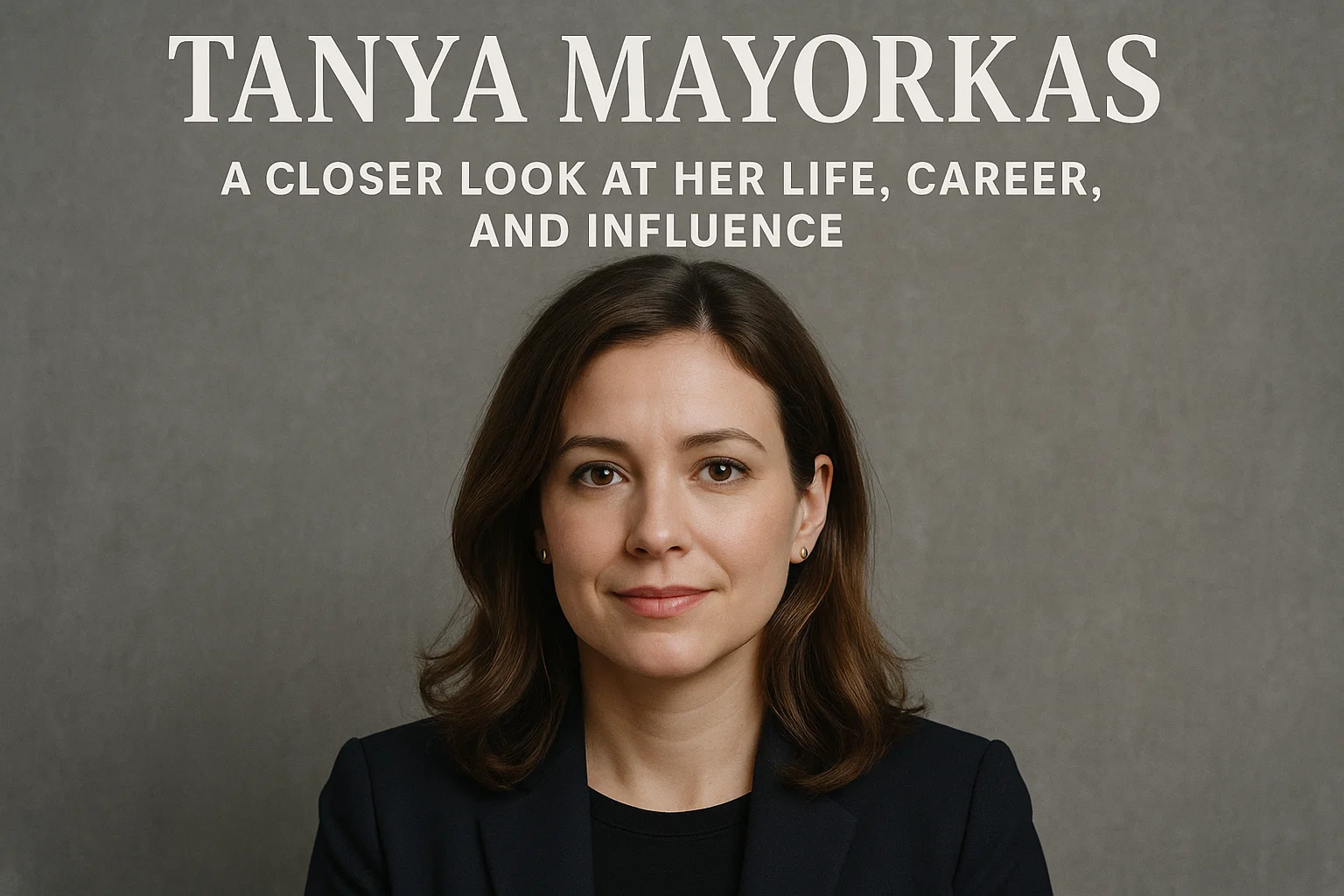
The name Tanya Mayorkas has surfaced across online searches, forums, and social media discussions, prompting curiosity about who she is and why her name appears in various digital spaces. In an era where even the slightest online mention can lead thousands of people to investigate a person’s identity, public intrigue surrounding this name is both fascinating and telling. This article aims to explore that curiosity, unpacking the factors that shape the attention directed toward individuals who do not necessarily live in the public spotlight. Understanding how and why these narratives develop is crucial for anyone navigating the modern digital landscape.
As we begin this detailed exploration, it’s important to emphasize the delicate balance between providing accurate, well-researched information and respecting the privacy of individuals who have not chosen public life. The internet often blurs the boundaries between public and private worlds, and responsible reporting requires care and precision. This article seeks to clarify the origins of the curiosity surrounding Tanya Mayorkas, explain the broader context of her name’s association with public figures, and help readers understand how digital identity is shaped and perceived in today’s information-driven culture.
Ultimately, the purpose of this article is to offer facts, context, and thoughtful analysis rather than speculation. It dives into the complexities of online identity, the role of search trends, and the psychology driving public interest in names that suddenly gain visibility. With a thorough and structured approach, this piece aims to illuminate not only who Tanya Mayorkas may be, but why her name matters within the broader framework of digital-era information circulation.
Who Is Tanya Mayorkas?
The name Tanya Mayorkas does not correspond to a widely known public figure, celebrity, or established authority. Instead, its presence online often arises in association with other individuals who share the Mayorkas surname, some of whom hold prominent political positions. When people encounter unfamiliar names linked—accurately or inaccurately—to recognizable figures, curiosity tends to increase. This is especially true in situations where information is scarce, leading individuals to fill in the gaps through assumptions or attempts to verify connections.
Public records and available mentions of the name suggest that Tanya Mayorkas is a private individual rather than someone who has intentionally cultivated a public persona. Private individuals often have minimal online footprints, which can paradoxically intensify curiosity when their names surface without accompany clear context. In the digital age, people have grown accustomed to being able to find public details about nearly anyone; when information is sparse, it becomes more intriguing.
Because of the lack of verified public details, it is essential to distinguish between factual information and online speculation. Without solid evidence connecting Tanya Mayorkas to specific public roles, professional achievements, or political affiliations, the most responsible approach is to acknowledge the absence of verified data rather than attempt to fill the void with conjecture. This article takes that ethical approach, offering insight into why the name generates attention while respecting the boundaries of verifiable knowledge.
Connection to Prominent Figures (If Any)
One of the primary reasons the name Mayorkas draws attention is because of its association with Alejandro Mayorkas, the United States Secretary of Homeland Security. As a major public figure, his name is widely discussed across political news, social media commentary, and policy debates. When a surname becomes prominent in public discourse, individuals who share it often find themselves inadvertently pulled into the spotlight, even when they have no direct relation to the well-known figure.
Online discussions sometimes link Tanya Mayorkas to political circles simply because people assume a familial relationship. However, assumptions based on surnames can be misleading. Many people share last names without being connected by family ties, cultural background, or professional networks. Without credible sources verifying any familial relationship between Tanya Mayorkas and high-profile members of the Mayorkas family, it is wise to refrain from drawing conclusions. Misattributions like these are common on the internet, where speculative content spreads quickly.
It’s also important to recognize that public misconceptions often arise from social media dynamics. When users attempt to connect dots that do not exist, these unverified links can snowball into widely circulated claims. This section serves as a reminder of the importance of verifying information rather than relying on assumptions, especially when dealing with names connected to political figures. The responsible handling of such topics protects both private individuals and the integrity of public discourse.
Biographical Background
Because Tanya Mayorkas appears to be a private individual, detailed information about her early life, upbringing, or childhood experiences is not publicly available. In many ways, this lack of biographical visibility is entirely normal. Most people do not have biographies published about them, nor do they have personal histories accessible online unless they have chosen to create such content. The absence of information should not be interpreted as secrecy; rather, it reflects the everyday privacy that countless individuals maintain without issue.
Education and career details for Tanya Mayorkas remain largely undocumented in public sources. This again aligns with the typical online footprint of someone who has not intentionally built a public-facing professional identity. Many individuals maintain personal and professional boundaries that keep their private details offline, and this choice becomes more significant in today’s environment where public exposure can be overwhelming. Without verified information, speculation about her educational background would be irresponsible and inaccurate.
Any major achievements or notable life events that involve Tanya Mayorkas are not reflected in public records accessible through common research channels. This does not diminish her importance as a person; instead, it illustrates a principle often forgotten in the digital age: not every life is meant to be documented for public consumption. The fact that her name appears online may simply be the result of incidental circumstances rather than an intentional effort to gain recognition or publicity.
Career and Professional Identity
Attempts to connect Tanya Mayorkas with a specific profession are complicated by the lack of publicly available information. Without clear evidence from verified sources—such as professional directories, public profiles, or news articles—it is impossible to accurately identify her career path. Many individuals work in industries that do not require public exposure, and millions of people consciously avoid professional platforms like LinkedIn, making it unsurprising that information might be minimal.
The internet can create confusion when names overlap with those of other professionals. It is possible that some references to “Tanya Mayorkas” online are actually referring to entirely different individuals who share a similar or identical name. This phenomenon is particularly common in databases where name duplication is frequent. For writers, researchers, and everyday users, this emphasizes the importance of cross-referencing information rather than assuming that all mentions refer to the same person.
In circumstances where professional misidentifications occur, individuals often face unintended consequences, such as receiving messages meant for someone else or being incorrectly associated with particular industries. The absence of verified career details for Tanya underscores the broader theme of this article: the digital era often creates more questions than answers, and responsible content creation requires respecting what is known, acknowledging what is unknown, and avoiding unwarranted conclusions.
Media Presence and Public Visibility
When assessing someone’s media presence, it is essential to consider the difference between voluntary visibility and incidental visibility. Tanya Mayorkas does not appear to maintain a deliberate media presence through interviews, public statements, or personal branding. Her name’s appearance in online discussions is more likely a byproduct of search trends involving the Mayorkas surname rather than an example of intentional self-promotion or media engagement.
Social media platforms have become powerful tools that shape public perception. However, they also amplify confusion when multiple individuals share names, or when users spread unverified claims without checking sources. In Tanya’s case, available evidence does not point to an active public social media persona that contributes to widespread notoriety. Instead, her name occasionally surfaces in discussions or search results due to broader interest in political figures bearing the same surname.
In an environment where online presence is practically expected, the lack of substantial media visibility often stands out. Yet this absence acts as a reminder that millions of people choose a low-profile lifestyle, even as the internet constantly pulls new names into public attention. Tanya Mayorkas appears to fall into that category, and understanding this context helps readers navigate the information responsibly. Her limited visibility underscores the need to respect boundaries and avoid overinterpreting sparse details.
Internet Searches and Trending Interest
Search patterns reveal much about public curiosity, and the name Tanya Mayorkas occasionally appears in trending data. This interest often coincides with increases in searches related to political events, news headlines, or controversies involving high-profile individuals with the Mayorkas surname. When a prominent name is in the news, people naturally explore related names, either out of genuine curiosity or in an attempt to uncover familial connections.
The spikes in search activity can also be linked to social media posts referencing the Mayorkas family, even if Tanya herself is not mentioned directly. Algorithms often group related keywords together, causing names to appear in auto-suggestions or “related searches.” This can create the false impression that Tanya is connected to ongoing public debates or political discussions, even when no such connection exists.
Understanding these search patterns helps explain how ordinary individuals become the subject of widespread curiosity. The digital world rewards curiosity with endless streams of suggested content, creating a loop where users encounter names repeatedly simply because others have searched for them. This phenomenon contributes to the mystery surrounding Tanya Mayorkas and highlights the need for critical thinking when interpreting search trends.
Misinformation, Confusion, or Common Misidentifications
Misinformation thrives when names appear without clear context. For Tanya Mayorkas, confusion often arises when people assume she must be related to political figures with the same surname. This assumption is understandable but problematic. Without confirmed information, such connections are speculative and contribute to the spread of inaccuracies. In many cases, the misinformation begins with a single social media post and expands through rapid sharing.
Another source of confusion involves individuals with similar names. When online directories list multiple people with identical first and last names, it becomes challenging to distinguish one from another. Search engines may merge unrelated data or suggest irrelevant results, creating the impression of a unified identity when none exists. This can lead users to mistakenly attribute careers, achievements, or controversies to the wrong person.
To navigate these challenges, readers should apply strategies such as checking multiple sources, verifying context, and avoiding reliance on assumptions. Recognizing the limitations of online information is essential. By understanding how misidentification occurs, we become better equipped to interpret digital narratives responsibly and avoid perpetuating unverified claims—especially when private individuals are involved.
Read more: Connections Hint Forbes