





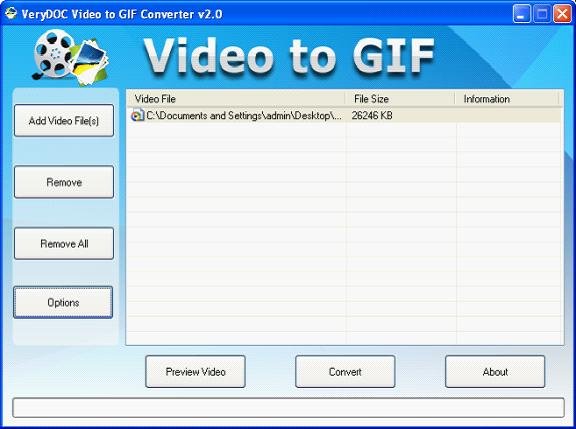
Video to GIF Converter In the modern digital landscape, visual content has become one of the most effective ways to communicate ideas, emotions, and information. People scroll quickly through social media feeds, websites, and messaging apps, which means content must be instantly engaging. Animated GIFs have emerged as a popular format because they are short, eye-catching, and easy to consume. This is where a video to gif converter becomes a valuable tool, allowing users to transform video clips into compact, shareable animations with ease.
GIFs offer a unique balance between images and videos. Unlike static images, they show motion, and unlike videos, they do not require a play button or sound. This makes them ideal for grabbing attention and delivering a message within seconds. Whether used for marketing, education, or casual communication, GIFs enhance how content is experienced.
Why GIFs Are So Popular
The popularity of GIFs lies in their simplicity and effectiveness. They load quickly, loop automatically, and work on almost every platform and device. Because they are short and silent, viewers can understand the message instantly without interrupting their browsing experience.
GIFs are also highly expressive. They can showcase reactions, demonstrate actions, or highlight important moments in a fun and memorable way. This makes them especially useful on social media, where engagement depends on quick visual impact.
Turning Videos into GIFs
Videos often contain valuable moments that do not require full playback. Converting a video into a GIF allows users to isolate the most meaningful part and present it in a lightweight format. This makes sharing faster and more convenient, especially when file size or platform limitations are a concern.
The conversion process usually involves selecting a video, choosing the desired clip length, and adjusting basic settings such as size or quality. The result is an animated GIF that captures the essence of the original video without unnecessary content.
Benefits of Using GIFs Instead of Videos
One major benefit of GIFs is speed. They load faster than videos and are easier to embed in websites, emails, and presentations. This improves the user experience and keeps viewers engaged.
GIFs are also more accessible. Since they do not rely on sound, they can be understood in silent environments or by viewers who prefer visual-only content. Their looping nature allows viewers to watch the animation repeatedly without any effort.
Another advantage is versatility. GIFs can be used across marketing campaigns, educational materials, tutorials, product demos, and casual conversations. Their adaptability makes them useful for both professional and personal purposes.
Common Uses of GIFs
In marketing, GIFs are used to promote products, highlight features, and create visually appealing ads. They help brands stand out and communicate value quickly. On social media, GIFs boost engagement by adding motion and personality to posts.
Educators and trainers use GIFs to explain steps, processes, or software functions in a clear and repeatable way. Designers and developers often use them to showcase animations or user interface interactions. Even in everyday messaging, GIFs add emotion and context that words alone cannot convey.
Tips for Creating High-Quality GIFs
To create an effective GIF, start by selecting a short and relevant video segment. The best GIFs are concise and focused on a single action or idea. Keeping the animation brief ensures smooth looping and prevents distraction.
Visual clarity is important. Make sure the GIF is not too large in file size, as this can slow down loading times. At the same time, avoid reducing quality too much, as blurry visuals reduce impact. If text is included, it should be easy to read and positioned clearly within the frame.
Choosing the right dimensions also matters. Smaller sizes work well for messaging and social media, while larger formats may be suitable for websites or presentations.
Conclusion
GIFs have become an essential part of digital communication because they are engaging, lightweight, and easy to share. They allow users to capture moments, explain ideas, and express emotions quickly and effectively. By using a video to gif converter, anyone can transform ordinary video clips into dynamic animations that enhance communication, improve engagement, and make visual understandings more memorable across multiple platforms.