





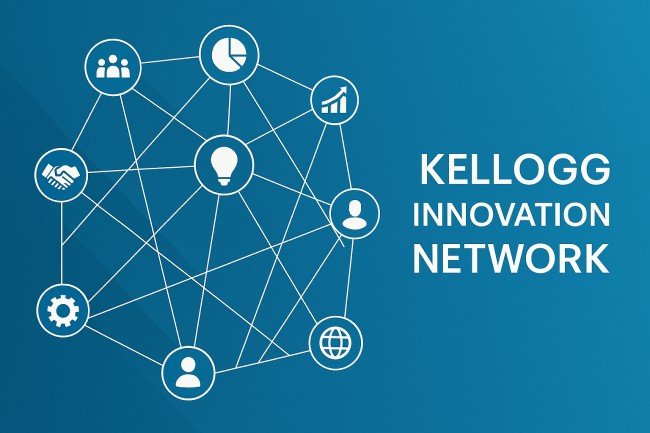
The Kellogg Innovation Network (KIN) stands as one of the world’s most influential platforms dedicated to advancing collaborative innovation across industries, cultures, and global systems. Its mission is to bring together leaders from business, government, academia, and the nonprofit world to address complex problems that no single institution can solve alone. Positioned within the prestigious Kellogg School of Management at Northwestern University, KIN provides a fertile ground for meaningful dialogue, breakthrough thinking, and sustainable solutions that reach far beyond the conference room. By focusing on real-world issues and forward-looking strategies, KIN ensures that its activities remain aligned with the evolving demands of a globalized world.
KIN’s purpose is not limited to brainstorming ideas; it is committed to catalyzing action. Participants engage deeply with pressing challenges, ranging from economic disruption to environmental sustainability, and work together to co-create actionable models. Through its structured innovation frameworks and collaborative ethos, KIN empowers members to explore new perspectives and design scalable solutions. This approach has positioned KIN as a hub where creativity meets practicality, and where global leaders align their visions for shared impact.
KIN’s mission also emphasizes the importance of long-term transformation. Rather than offering short-lived solutions, the network focuses on enabling systemic change. This includes nurturing emerging leaders, inspiring fresh viewpoints, and ensuring that every initiative contributes to a broader narrative of global progress. As a result, KIN is recognized not only as an innovation network but as a movement driving meaningful shifts in how organizations collaborate and solve problems.
Origins and Foundations of the Kellogg Innovation Network
The Role of Northwestern University’s Kellogg School of Management
The Kellogg School of Management provides the intellectual backbone and institutional support that makes KIN possible. As one of the world’s most respected business schools, Kellogg has long been associated with leadership development, strategic thinking, and organizational innovation. Its commitment to preparing leaders for an interconnected world aligns perfectly with the principles that guide KIN. This academic foundation ensures that KIN’s work is grounded in rigorous research, evidence-based frameworks, and the latest advances in managerial thought.
Kellogg’s faculty play a crucial role in shaping the direction of KIN. Their expertise in fields such as global strategy, leadership, entrepreneurship, and social innovation provides essential insight into the challenges KIN seeks to address. By integrating academic excellence with practical industry experience, Kellogg ensures that KIN remains both visionary and relevant. This blend of theory and practice sets KIN apart from conventional networking or innovation groups that may lack academic depth.
The Kellogg School also offers an environment where diverse voices converge. Through its global network of alumni, corporate partners, and academic collaborators, Kellogg amplifies the reach and influence of KIN. This broad ecosystem allows the network to draw insights from multiple disciplines and geographical regions, enhancing its ability to drive transformative outcomes. Ultimately, the strength of KIN is a reflection of Kellogg’s longstanding commitment to empowering leaders who shape the world.
Visionaries Behind the Creation of KIN
The Kellogg Innovation Network was founded by leaders who believed deeply in the power of collaboration and interdisciplinary thinking. Their vision was to create a space where individuals from different sectors could gather to discuss challenges too large or complex to be solved in isolation. These founders recognized that innovation is rarely the product of a single mind; instead, it emerges from the dynamic interplay of ideas, experiences, and expertise. This philosophy continues to shape KIN’s identity and operational model to this day.
The founders were also motivated by a strong desire to bridge the gap between theory and practice. They foresaw a future in which global challenges—from technological disruption to climate change—would require unprecedented levels of cooperation. By bringing together executives, policymakers, academics, and innovators, they hoped to foster an environment that would accelerate solution-building. Their ambition was not merely to inspire conversations but to enable collective action that drives measurable change in the world.
Their early work laid the foundation for what KIN has become today: a globally recognized platform that promotes systemic thinking and fosters long-term impact. These visionaries understood that innovation thrives in environments where ideas flow freely, hierarchies fade, and curiosity is celebrated. As a result, KIN functions not as a traditional organization but as a vibrant ecosystem—one that continues to grow and evolve with the world.
Core Principles That Guide KIN
Collaborative Innovation as a Foundational Principle
At the heart of the Kellogg Innovation Network lies the principle of collaborative innovation—the belief that breakthroughs emerge when people from diverse backgrounds work together. KIN operates on the assumption that no single organization has all the knowledge or resources needed to solve the world’s biggest problems. This principle encourages members to move beyond traditional competitive boundaries and embrace partnerships that create shared value. Collaboration is not just encouraged; it is embedded into every facet of KIN’s programming and culture.
Collaborative innovation also promotes the exchange of perspectives. Members are encouraged to explore uncomfortable questions, challenge assumptions, and engage in constructive dialogue. This environment helps stimulate creativity and unlock new possibilities that would be difficult to achieve within siloed organizational structures. By encouraging openness and curiosity, KIN cultivates a mindset that sees complexity not as a barrier but as an opportunity for inventive problem-solving.
Another key aspect of collaborative innovation is its emphasis on action. KIN’s approach ensures that discussions do not remain theoretical but translate into meaningful initiatives. Members work together to design pilots, test ideas, and refine solutions that can be implemented in real-world settings. Through this principle, KIN demonstrates that collaboration is not only intellectually stimulating but also instrumental in creating lasting impact.
Read more: Megan Avedian